

Digital Anthropology from Group Chats to Community Life
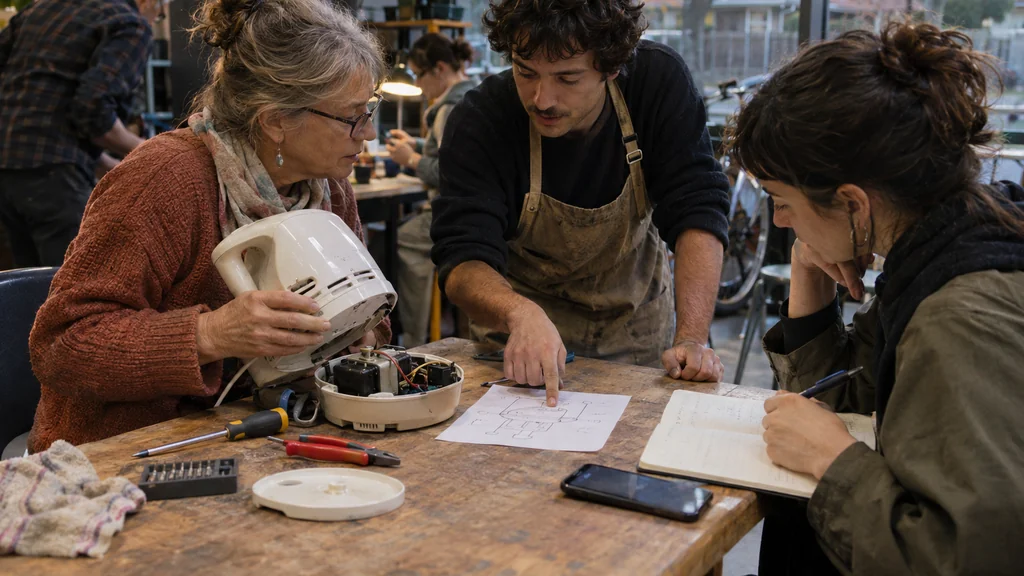 On a Thursday evening, someone posts a photo of a broken toaster in a neighbourhood repair café’s group chat. By Saturday, a volunteer has brought a spare part, another has printed a diagram, and a regular who rarely posts online is showing the owner how the mechanism fits together. Imagine following that repair from the first message to the workbench and back to the group chat. You would see how people share expertise, decide whom to trust and make room for newcomers. Those are the kinds of questions digital anthropology asks.
What is digital anthropology? It’s the study of how digital technologies shape social life and how people make those technologies their own. A researcher might compare how a neighbourhood group, a games forum or an online casino such as Spinanzia casino introduces its rules. Interviews could then show which rules a newcomer understood, where they looked for help and whether they joined in. The repair café is a fictional example of how that kind of research can move between settings.
What a repair café can tell us about digital life
Anthropologists use digital ethnography methods to spend time with people and see what they do in practice. At the repair café, a message that gets no replies might still lead to a repair. A volunteer could read it, recognise the toaster model and bring a part on Saturday. To understand how help travels, the researcher would need to look at what happens around the post as well as what appears beneath it.
Suppose the group’s most frequent poster is also the person who runs its account. That may explain why their name appears so often. Across two or three sessions, the researcher could check how people find help at the workbench. First visits might begin in the chat, while regulars may go straight to a volunteer. The difference gives the researcher a field question worth following.
Who learns the rules through the group chat, and who learns them by turning up?
Digital anthropology fieldwork begins with a small question
Take that question into the field and follow a handful of repair requests from start to finish. Where possible, compare what people post with what they recall doing. A quiet member might read the chat daily and never write. Someone who posts often might seldom attend. Put those accounts alongside what you observe at the workbench, where asking for help can be as subtle as placing a broken kettle beside a volunteer.
| Setting | What to look for | What to ask |
|---|---|---|
| Group chat | A first request for help | How did the person know where to ask? |
| Workbench | A volunteer takes over a repair | How do people share responsibility for the job? |
| Follow-up message | A photo of the repaired item | Whose contribution gets mentioned? |
| Next session | A newcomer returns | What made the person feel welcome? |
The Association of Internet Researchers’ ethics guidance encourages researchers to consider the context in which material was shared. Someone might be happy to show you their post and still expect the discussion around it to stay in the group. Agree on what you can record and how you’ll use it. Check those agreements again if the project moves from the café’s noticeboard into a private chat.
- Explain the project before collecting messages or photos.
- Ask who can see each conversation and who people expect to see it.
- Seek separate permission before using an identifiable screenshot.
- Check whether an exact quote could lead someone back to the original post.
- Keep a record of how you’ll handle requests to withdraw material.
Reading digital anthropology news with a fieldworker’s eye
Start with research project pages from centres such as RMIT’s Digital Ethnography Research Centre, or look for studies you can read in full. UCL Press’s 2026 open-access collection Understanding China through Digital Anthropology, edited by Daniel Miller and Xinyuan Wang, includes case studies of how digital communication shapes work and healthcare. The collection takes readers into the everyday settings where people use these technologies.
Headlines often leave out the details you need to judge a finding. Look for the setting, the people who took part and the period covered by the research. If a piece describes one group, ask how its membership might have shaped what the researchers saw. If it compares groups, check whether the same app played a similar role in each place. Those details make a finding easier to interpret.
If a study followed one group, what would you need to know before applying its findings to another?
Choosing a master’s in digital anthropology
UCL’s Digital Anthropology MSc combines anthropological theory with the study of platforms, smartphones and digital infrastructures, and includes a dissertation. If you want to study in Australia, search across anthropology, digital media and communication degrees for supervisors whose work matches your interests. Read the current handbook and ask whether you can do a supervised ethnographic project. The structure of that project will shape how much contact you can have with participants.
| Compare | Where to look | Question to ask |
|---|---|---|
| Methods training | Core unit descriptions | Will I practise observation and interviewing? |
| Supervision | Staff profiles and recent projects | Who could supervise research in my setting? |
| Ethics support | Research project handbook | What approvals do student projects need? |
| Research time | Dissertation or capstone timetable | How many weeks can I spend in the field? |
You can test whether the subject interests you before applying. Choose a group or activity you already know and write a short proposal without collecting anyone’s private material. A page is enough to make the work concrete.
- Name the activity you want to understand.
- Write one question about what people do together.
- Identify where you would need permission to observe.
- Describe what you could learn from interviewing a participant.
- Note what a project of that size would leave unanswered.
Back at the repair café, the toaster works because several people help at different points, often outside the group chat. The photo, the spare part and the advice at the workbench each tell a piece of that story. Put them together and you can ask how the group’s expertise circulates and who gets to contribute. A question that specific gives you somewhere to start, whether you’re reading your first study or planning fieldwork of your own.